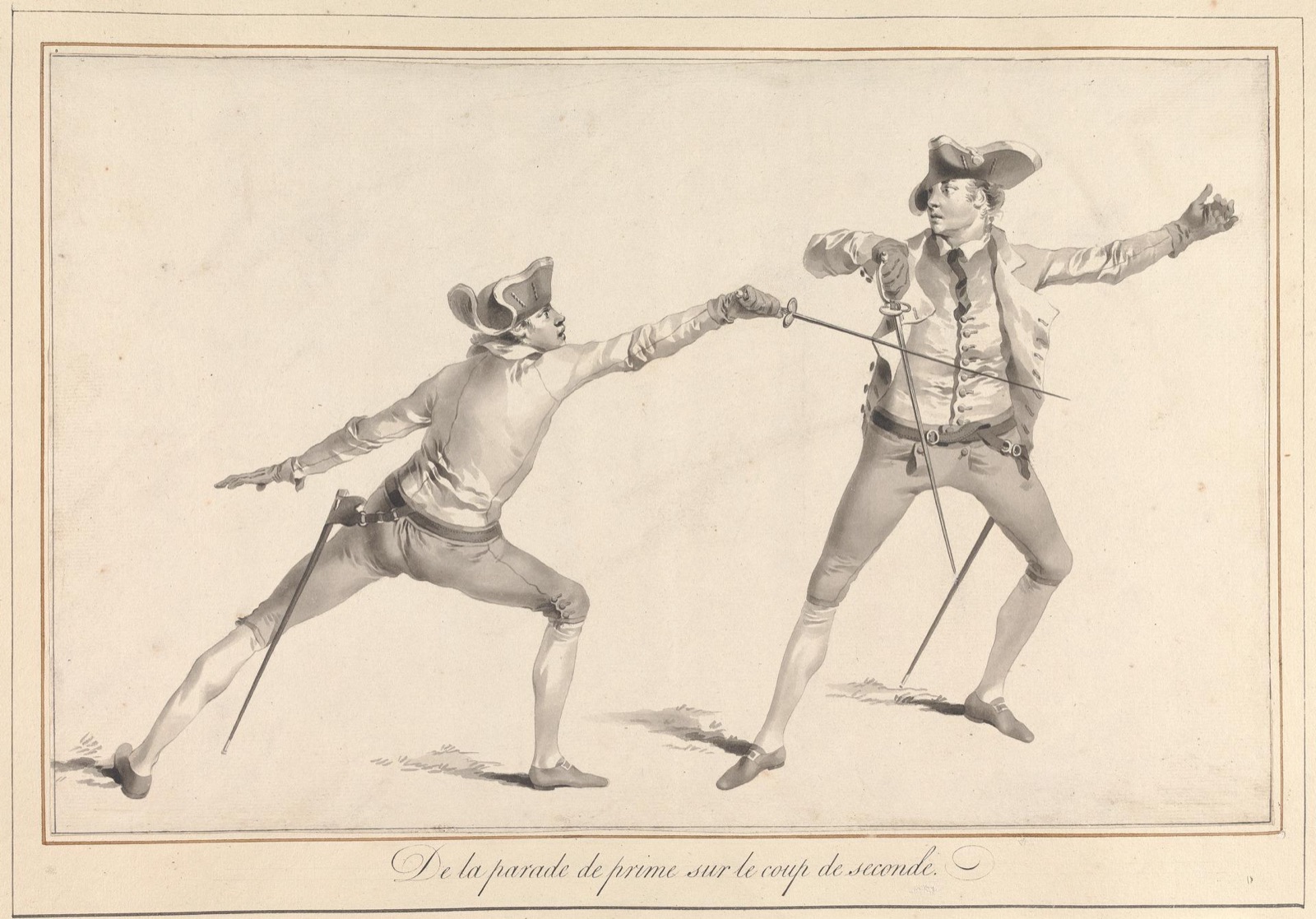
Poets' muses tell of the hand position that comes exactly after drawing the sword from its scabbard. Since it is the first position, we call it prime. Many fencers find it repulsive, others count it among their favourite actions. The truth lies somewhere in between.
Introduction and execution
Prime is one of the eight basic positions of the French school and also one of the four basic positions of the Italian school, which reduces certain positions by not distinguishing how the radius and ulna sit relative to each other – supination and pronation, i.e. whether the palm, the thumb or the index finger points up. Prime is so specific that it resembles no other hand position, and at the same time it has a precisely defined form that is the same in both schools.
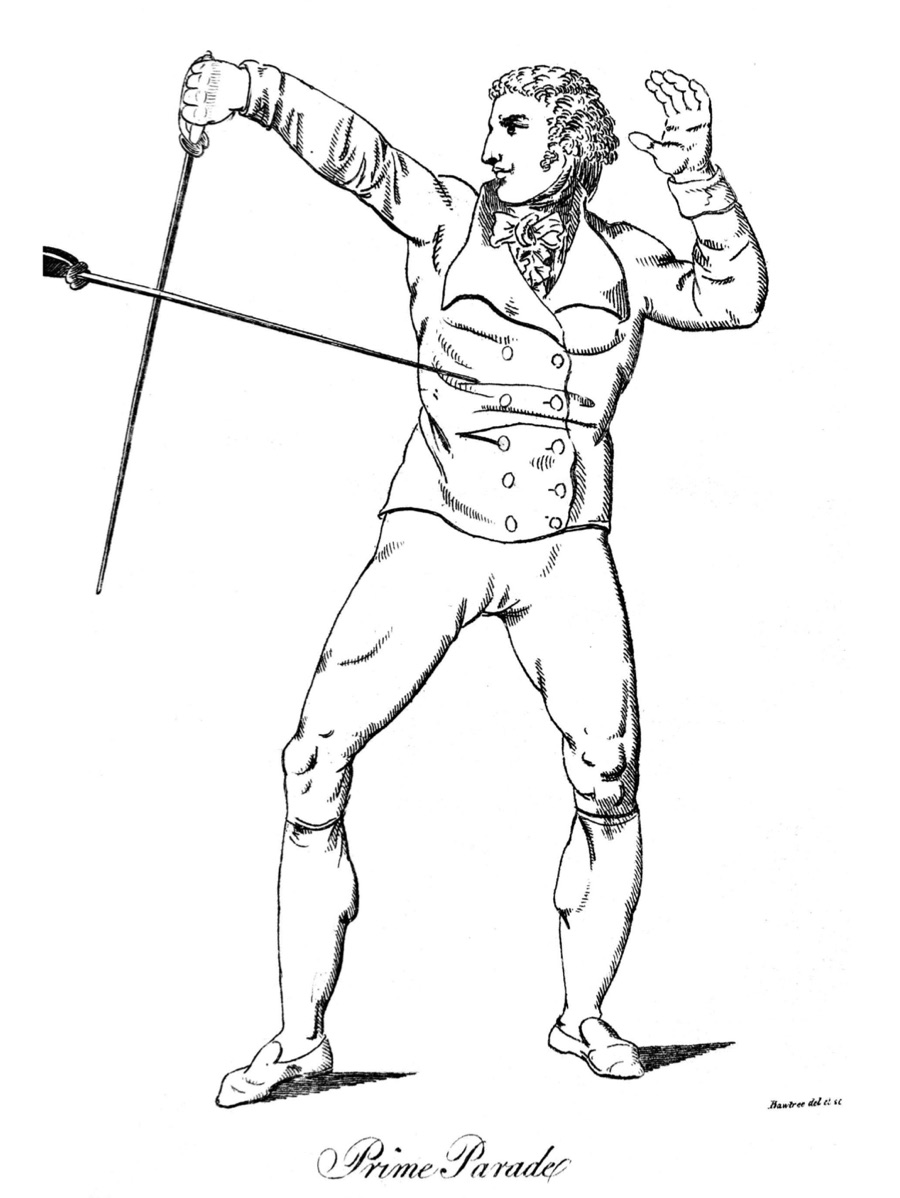
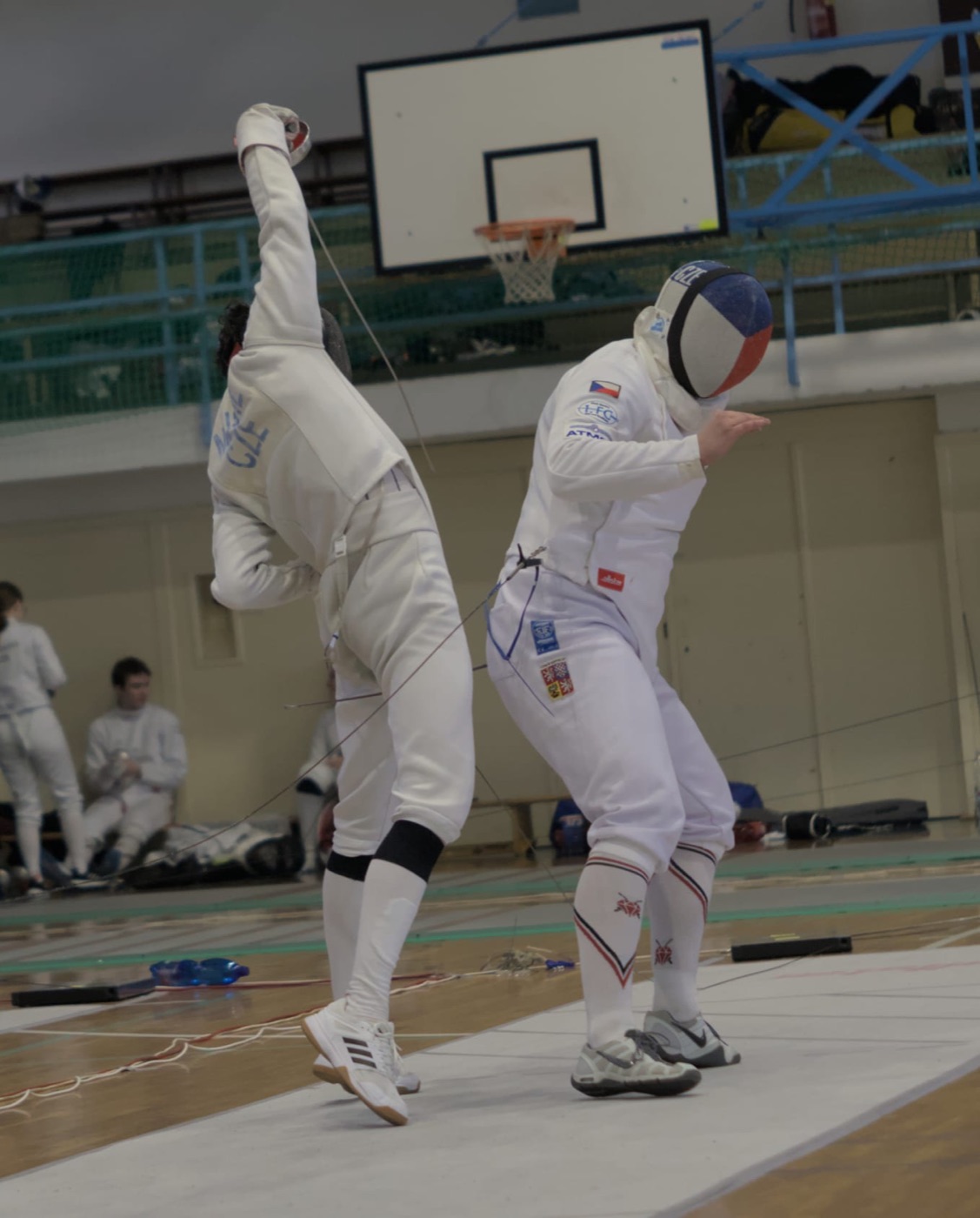
Let us outline what it looks like. It is a position covering the fencer's upper inside quadrant. The sword arm forms a kind of "window" around the head; you could also compare it to wiping your forehead. The blade is parallel to the body with the point towards the floor, something you will not see in any other position. We hold the weapon so that its groove (the channel the wires run in) faces behind us, not off to the side. This is for correct point control.
Possible actions
Just as it differs from other hand positions, prime also has specific uses. In general, because both hand and blade are very close to the body, prime plays an important role at close quarters, be it a parry, a ceding parry, a thrust with a bind, a beat or an emergency hit just before a collision.
Since prime is a hand position for close distance, a parry is the obvious choice. A parry is a defensive action in which we deflect the opponent's point to where it does not threaten us, giving us the chance to riposte. In our case the opponent attacks with a straight thrust to the body. From the on-guard hand position we move into prime, collect the opponent's blade with the edge of our own and so prevent the hit. Now we still have to close the distance with an advance or a half-lunge and riposte to the opponent's flank or, alternatively, the thigh.
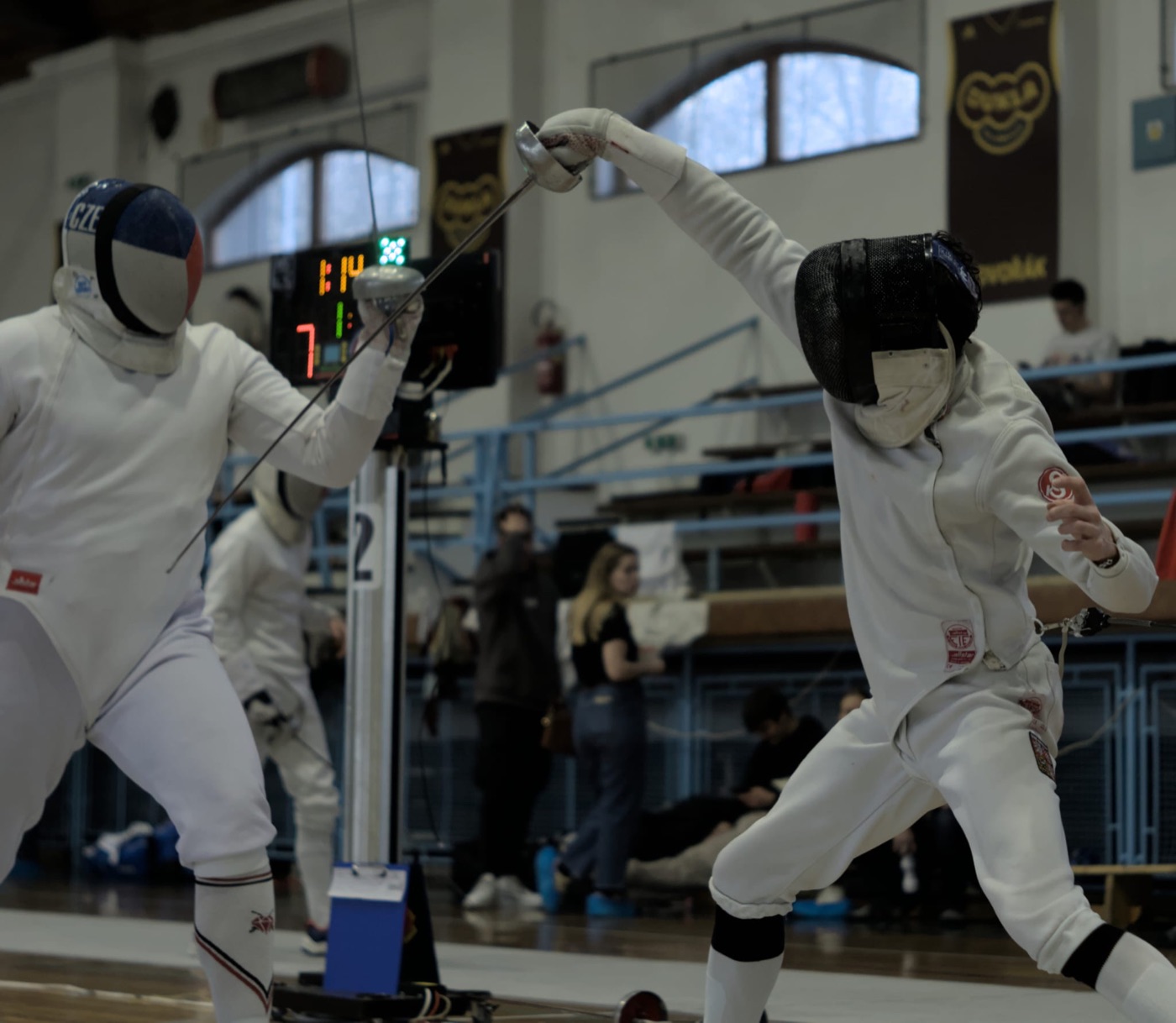
It is a very long movement during which the fencer generally opens up a lot, and it is very easy to avoid. That is why it has to be taken either at the last moment or with pressure on the blade. In other words, we pretend to engage the opponent's blade in a parry of sixte or tierce so that they can still get through. Fencers are sneaky people, so we let the opponent believe we parried badly in sixte or tierce. They feel the pressure on the blade and have to push back so as not to lose their advantage – often completely subconsciously. As soon as they come close, we already have blade contact ready, simply pull the fist over the opponent's bell guard into prime and riposte. We can think of this action as a parry of prime via sixte or tierce. Those act as a little helper here, or in scientific terms a catalyst that eases the course of the action. Or we can think of the action as a ceding parry.
The pure ceding parry hides prime's greatest strength. In the previous case we engaged the blade ourselves to get blade contact. What if the opponent does it for us? Let us say the opponent attacks with a bind and takes our blade away (a right-hander against a right-hander in sixte, a left-hander against a right-hander in quarte, or a left-hander against a left-hander in sixte). Now we already have blade contact and the opponent is actively pushing our blade exactly where we need it. We use their strength against them by pushing slightly against the blade at first, so that they add even more force. Then, with the same movement as in the previous action, we "cede" into prime by moving the palm over the opponent's bell guard. They started the action, they had us in a bind, so to speak, and could hit us. The ceding happened and the roles were reversed. Now we had their blade parried, they could not hit, and we could. You can picture the movement as a disengage followed by a parry, but joined into a single motion. Distance is crucial here. It has to be closed, otherwise we will not land the riposte.
Ceding into prime also works great as a second intention. Say we are preparing a thrust with a disengage in the direction of the sixte circle and commit to it 100 %, but suddenly the opponent decides to parry to the other side (sixte/tierce against the same handedness, quarte/quinte against the other). We, however, have the ceding into prime in reserve, so we withstand their defensive action and hit through their attempted parry.
An offensive bind in prime is rarely taken because of the distance problem: the risk of a stop hit is too high, or against a fencer of the same handedness we run into their bell guard (unless we aim for the outside of the thigh). In a right-hander versus left-hander bout, however, the action can work if the opponent does not watch the distance and is close. Then the whole body is open for a hit in the bind.
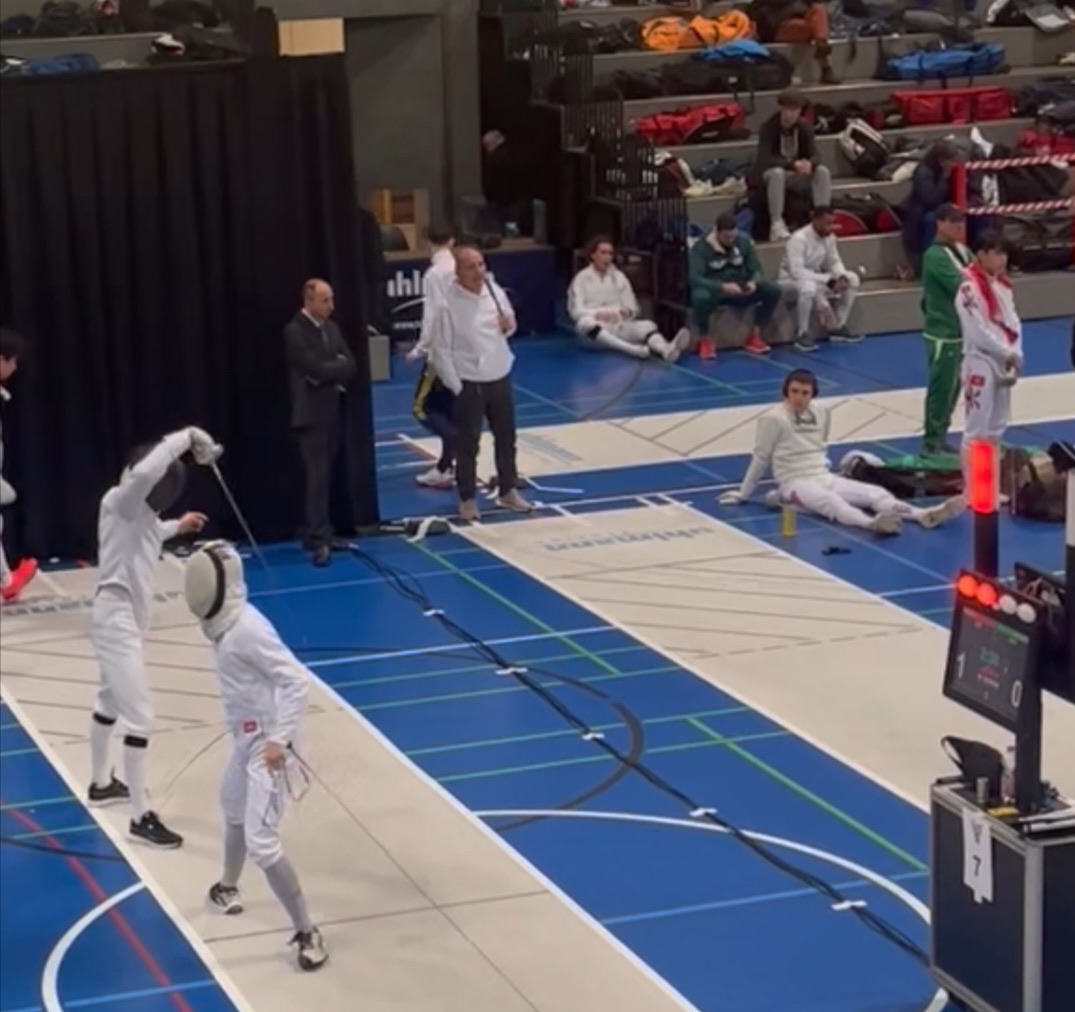
A right-hander against a right-hander, or a left-hander against a left-hander, can make very nice use of prime as a beat to remove the blade and flick a hit onto the back. That takes a lot of experience and many hours of training, so that the flick does not hurt, because that is not done. A fencer causes pain psychologically, never physically.
How to defend against prime?
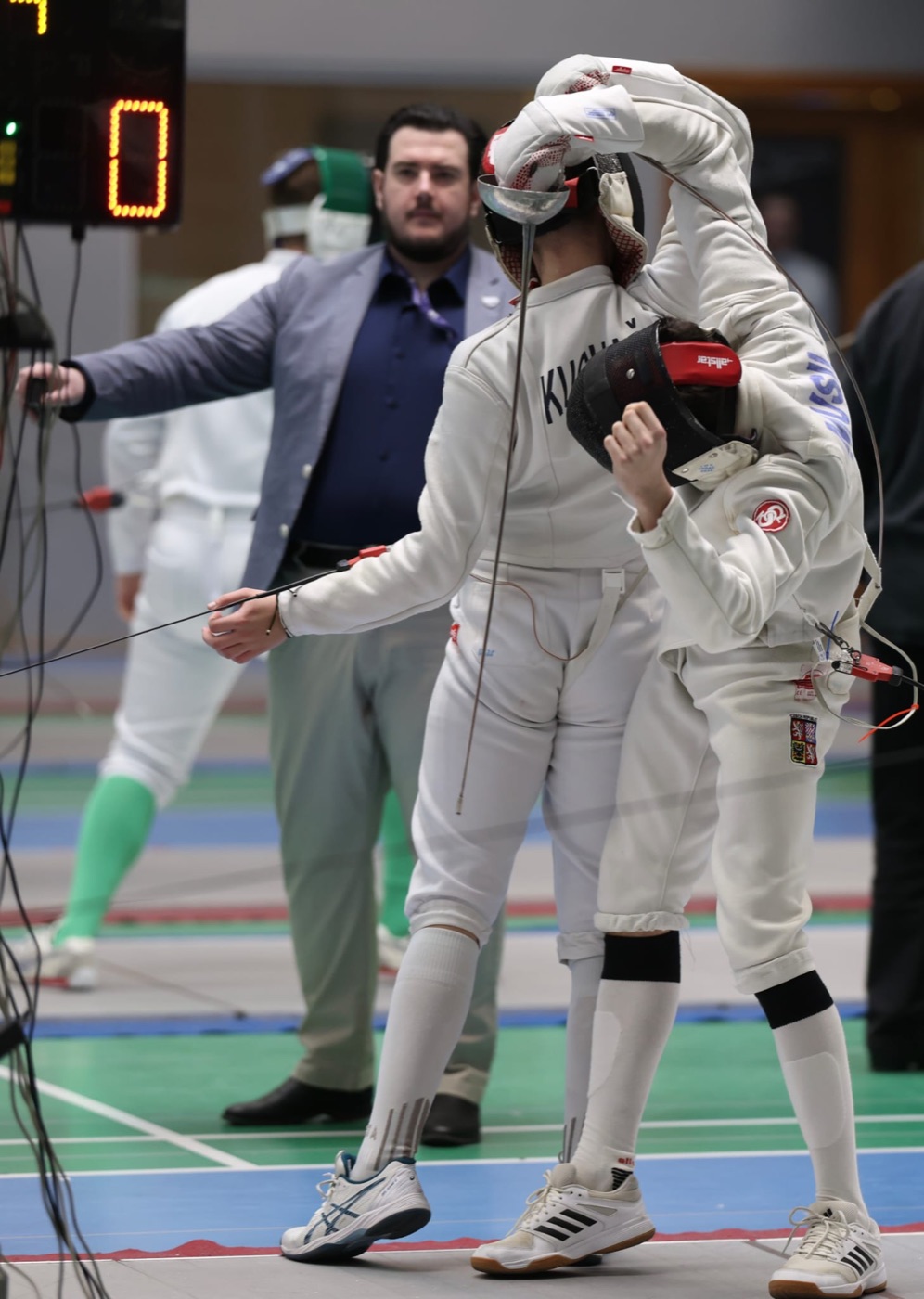
First of all, it is good to avoid situations in which it could be used. If we notice that the opponent can do a ceding parry, we avoid, whenever possible, taking their blade into a position that would play into their hands, or we parry by pressure and riposte without blade contact. If the ceding parry does happen, we can escape to a safe distance, hit through their parry from an angle, with a flanconnade, or by changing from sixte/tierce to septime, or from quarte/quinte to octave/seconde. The last option is risky: quickly, at close distance, try to riposte in prime ourselves, which we can get into even with a bizarre evasion over the head or behind the back. But that is the very last resort.
Conclusion
Prime is a tool for punishing binders who bind the blade too often, so it is understandable that many people hate it. But if it is limited to emergencies in defence and perhaps a few specific hits that come once or twice a bout yet humiliate the opponent, it is a tremendous weapon in a fencer's repertoire. Let everyone form their own opinion, but from experience – landing a ceding parry feels just prime!